Home Visit Itinerary Hall of the Horses
Hall of the Horses

This is the only room in the villa that was originally defined as a hall, both due to its size and function. It was here that feasts and balls were held, such as the one in honour of emperor Charles V on his visit to Mantua in 1530.

The room owes its name to the beloved horses of the Gonzaga stables depicted in the decorations. Life size, they appear set against a background of distant landscapes. Their poses, gaze and size bring them directly into the living space. These real portraits testify to the Gonzaga’s love for horses and indeed we still know the names of four of them: Morel Favorito, Glorioso, Battaglia and Dario. The first and last still bear traces of their name written below.

Like his father and ancestors, Federico bred horses in the famous Gonzaga stables: they represented the finest gift a Gonzaga could give to a friend, such as Giulio Romano, or to a ruler, like emperor Charles V.  It is no coincidence then that they are the protagonists of the principal reception room.

The space, lit by three windows, is decorated with classical architecture of the Corinthian order. This is embellished with highly coloured and cleverly painted faux marbles that lend further majesty to this important reception room. The paintings occupy the whole space between the top of the doors and the wooden ceiling; on the south wall is an impressive fireplace characterized by an original blend of perfectly finished elements and rustic stonework.

In order to heighten the elegance and solemnity of the horses, these are alternated with alcoves containing statues of deities or busts of classical dignitaries. Above these, six of the labours of Hercules are painted to imitate bronze bas-reliefs.

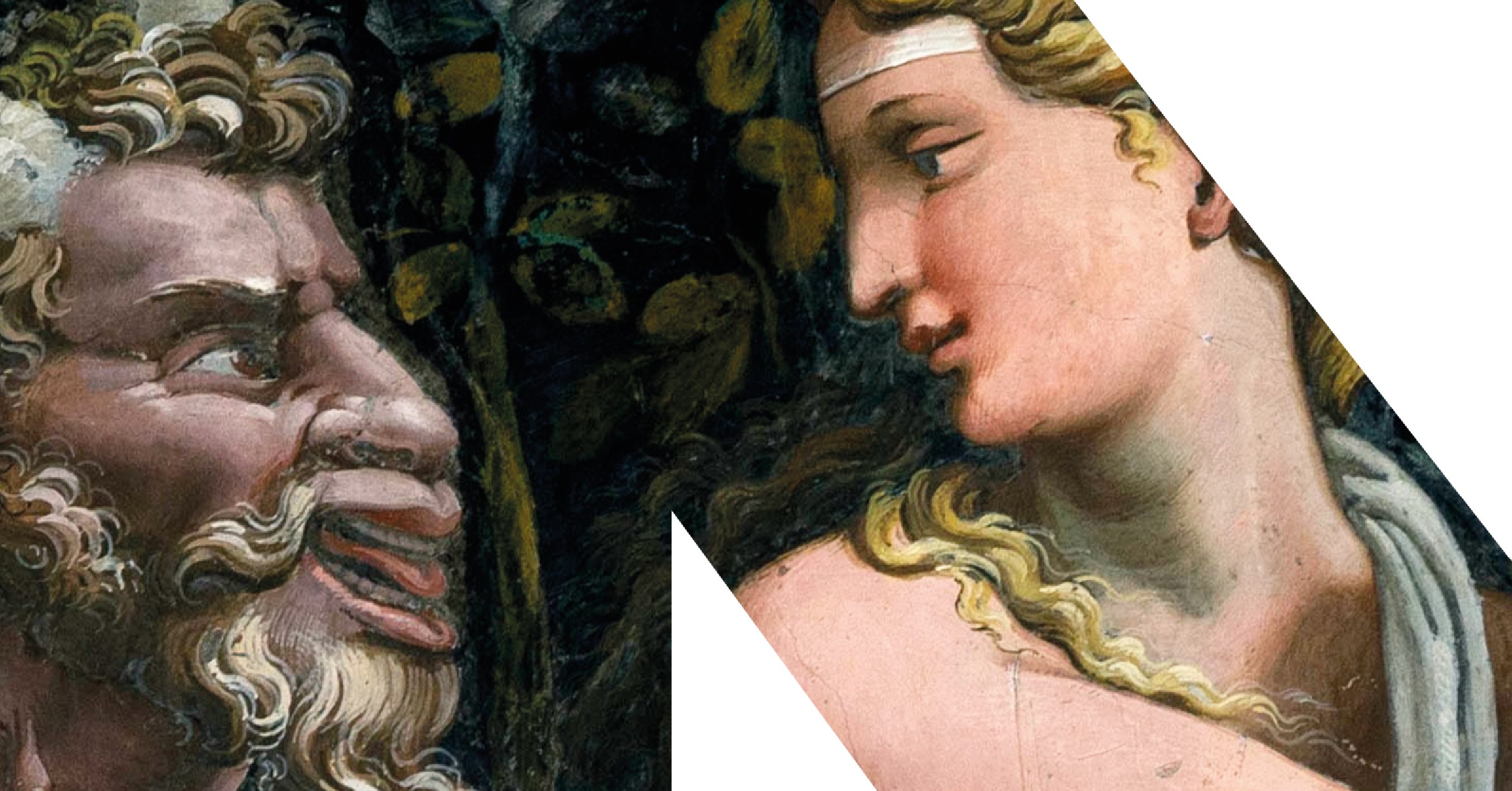
The decoration concludes with a sumptuous frieze of acanthus leaf volutes, in the classical style but revisited and populated with male and female putti playing over the heads of mocking grotesque masks; playful elements that interrupt the solemn regularity of the imitation architecture.

The Gonzaga eagles painted in the corners celebrate the patron, as do the devices of Mount Olympus and the salamander engraved in gold on a blue background in the  splendid wooden ceiling.

The room was decorated between 1525 and 1527.


Parete Ovest/West wall

Parete Est/East wall

Parete Nord/North wall

Parete Sud/South wall