|
The Chamber of the Giants is the most famous and most arresting room in the palazzo. Unique in the history of modern art, Giulio Romano’s daringly experimental painting here has remained without parallel for centuries.
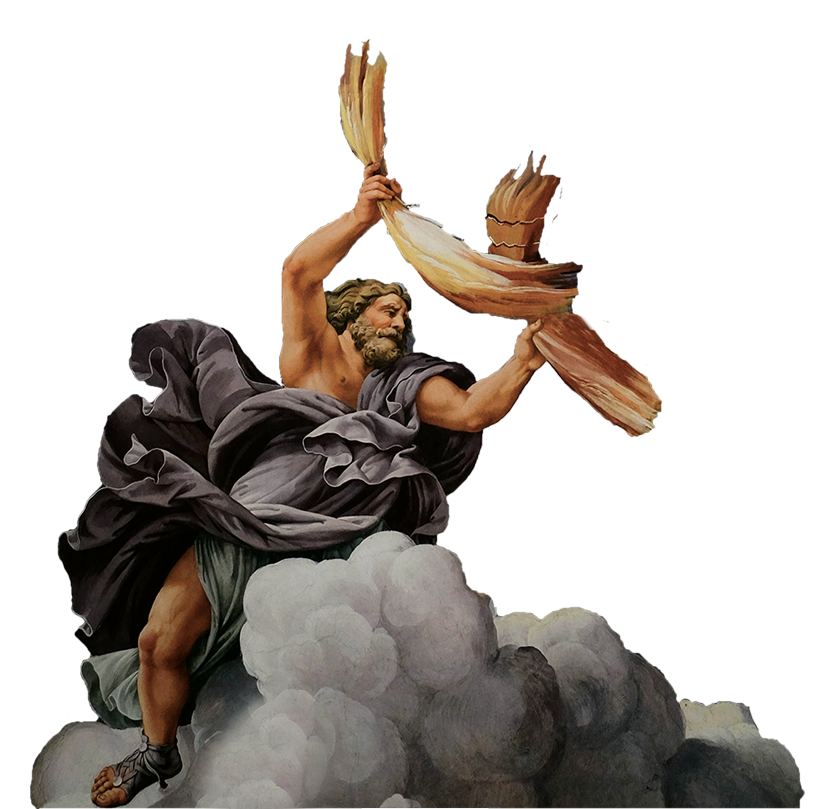
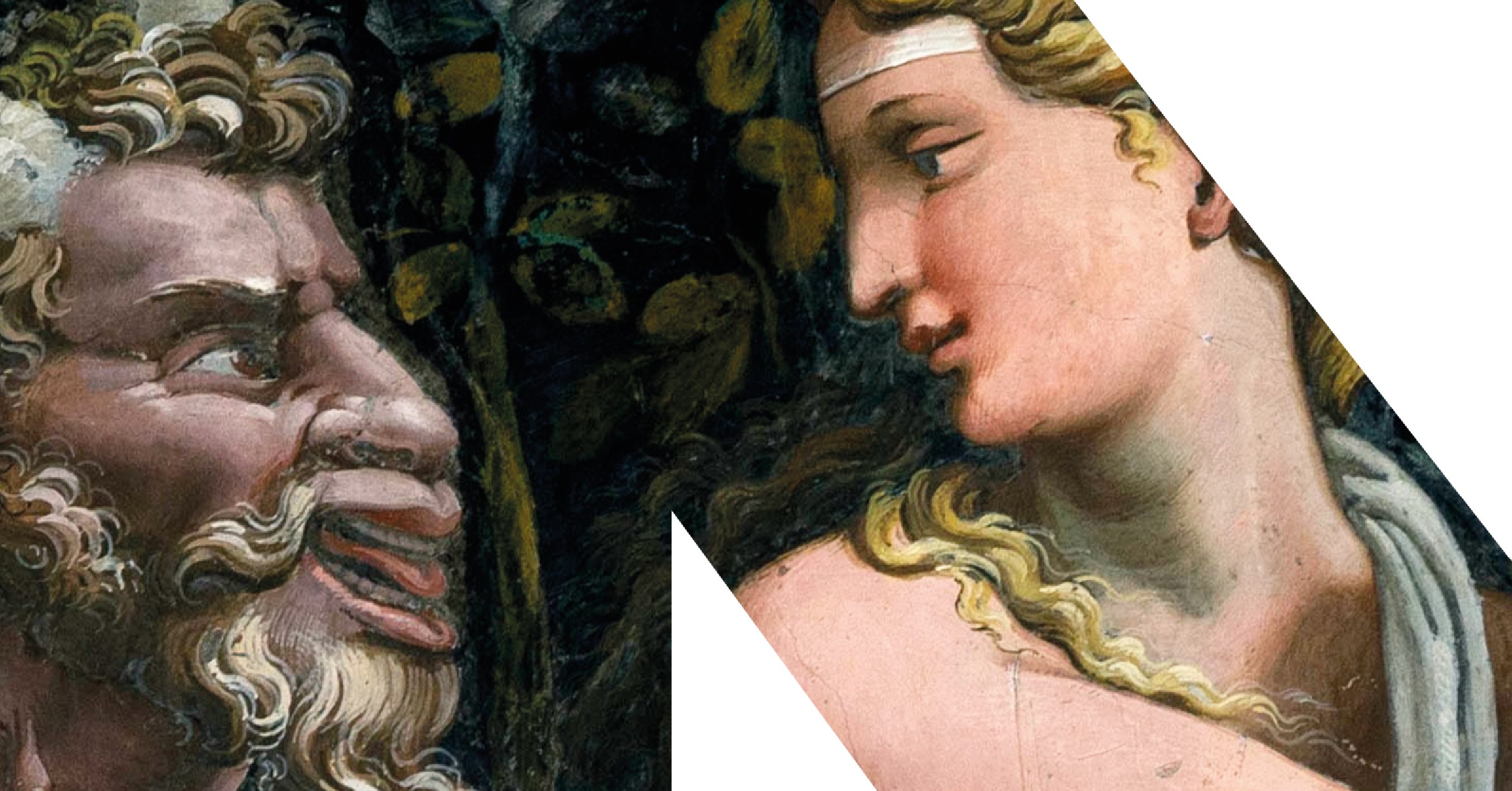
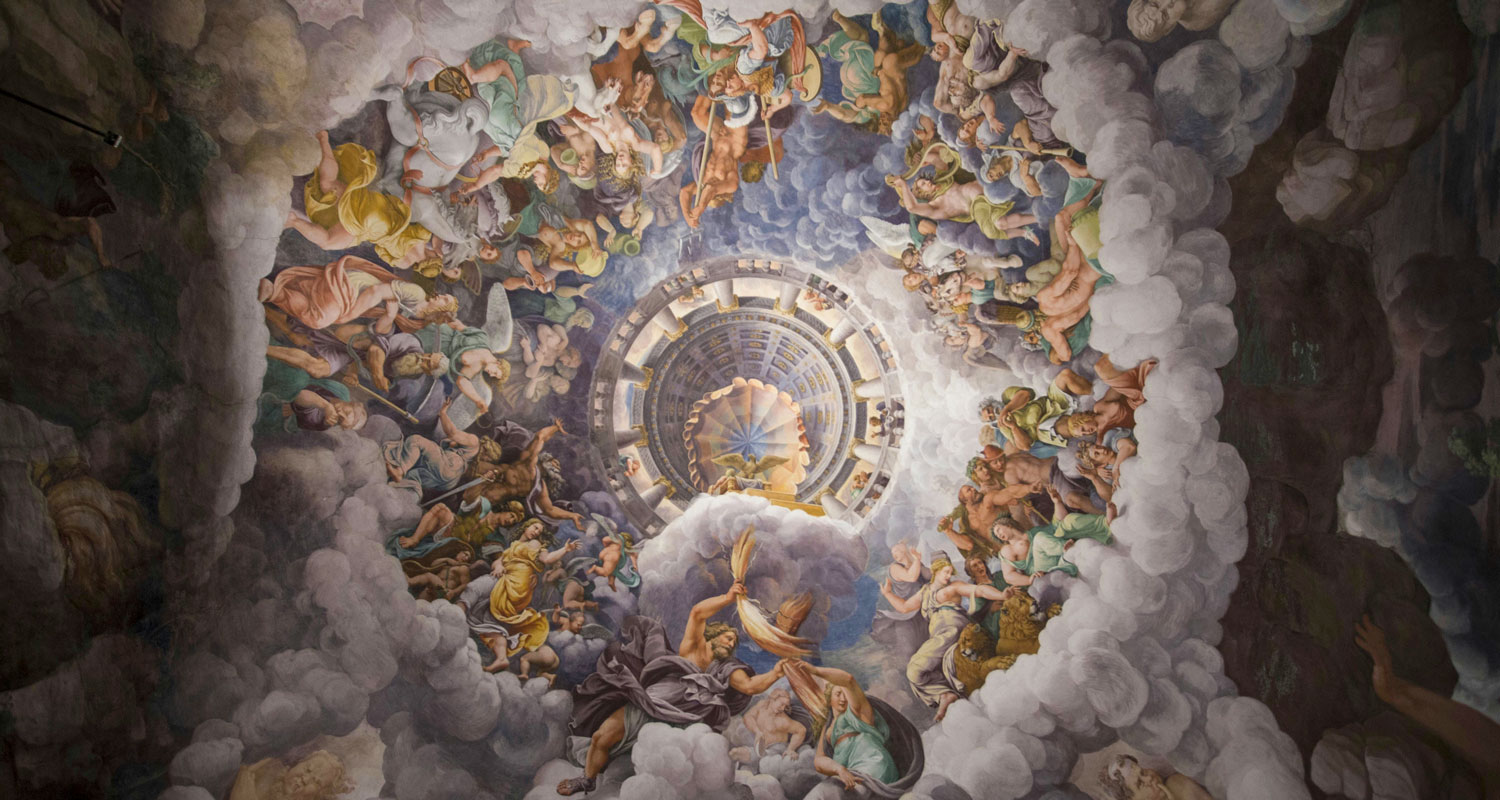
The room is conceived as a single space in which decoration and reality overlap. On entering one is plunged directly into the story. The archaeological boundaries are concealed by the painting as the walls, vault, and originally the floor, merge without distinction. Vasari tells us in fact that the floor was made of river pebbles that continued, painted, around the base of the walls. The story portrayed is the Fall of the Giants from Ovid’s Metamorphoses and, as is clear from some of the details, it is derived from a later Italian edition that alters the original text. Wicked and presumptuous earthly inhabitants, the giants planned to overthrow the gods. In order to reach the top of Mount Olympus they piled mount Ossa on top of mount Pelion and began to climb. Giulio Romano depicts the moment when, aided by Juno, Jupiter takes his revenge, punishing the giants by unleashing the fury of the elements against them and striking them with his thunderbolts. As spectators we are conveyed to the heart of the scene: the large crowd of Olympian gods up in the sky, with Jupiter at the forefront, and the ruinous fall of the giants on the earth. In the centre of a sky painted with masterly perspective there appear a round temple seen sotto in sù and the throne of Jupiter, over which an eagle presides. Separating heaven from earth at the four corners of the globe, represented by the room, are the winds blowing through the clouds. Lower down mountains, buildings and temples are collapsing around the Giants’ broken bodies. Although the decoration unfolds around the walls in a continuous and unitary manner, each has its own setting. A fireplace on the east wall, traces of which can be seen, was cleverly incorporated into the scheme: the real flames that burned here continued as painted flames issuing from the mouth of the giant Typheus, here buried under the rocks of Sicily and the cause of Etna’s eruptions. On the west and north walls are huge, close up figures of the giants, rocks and collapsing buildings. In the distance, however, open landscapes convey the sense of horror and disaster brought about by the gods’ reaction to the presumptuousness of the giants. The scene can be interpreted politically as homage to the power of Emperor Charles V and ethically as a punishment and warning against the arrogance of those same sovereigns. Documents show that most of the painting was executed between 1532 and 1534 by Rinaldo Mantovano, assisted in the landscapes and architectural elements by Luca da Faenza and Fermo Ghisoni. It was decided during the restoration work carried out in the Eighties not to remove the graffiti that runs all around the room. The earliest writings date from the sixteenth century and have become part of the history of the chamber. It is interesting to note how the powerful drama and uniqueness of the room has provoked a range of different reactions, from Vasari’s complete admiration to the repulsion and disgust of Charles Dickens.
Volta/Vault
|
Parete est
|
|